
High Quality Dog Bed Reviews 2026: Top Picks Tested
Table of Contents
- What Separates High Quality Dog Beds From the Rest
- Quick Comparison: Top Dog Beds Reviewed
- Orthopedic Dog Beds for Large Breeds: What Actually Supports Joints
- How to Choose a Dog Bed: Size, Sleep Style, and Material
- Washable Dog Bed Covers: Why Machine-Washable Matters
- Durability Testing: What 12+ Months of Use Reveals
- Sustainability and Senior Dog Mobility: Two Angles Most Reviews Miss
- Conclusion
- Frequently Asked Questions
Last Updated: October 2, 2026
What Separates High Quality Dog Beds From the Rest
A high quality dog bed is a sleep surface built around three things: foam density that holds its shape, a cover you can actually remove and wash, and a base that stays put on hard flooring. Everything else is marketing. This guide from Wooflies covers what dog bed reviews usually skip, including how foam behaves after a year, why washability decides whether a bed survives, and which shapes suit which sleepers.

Most reviews rank beds by how they look in a photo. That is the wrong test. A bed that photographs well and flattens in four months has failed at its only job.
Below, we break down the construction details worth paying for, then compare five beds we stock side by side.
Quick Comparison: Top Dog Beds Reviewed
Here is the short version for anyone comparing options right now. All five beds below come from Wooflies, and the prices are the current listed prices.
| Bed | Price | Size | Best For | Cover |
|---|---|---|---|---|
| PurrClean Washable Waterproof Pet Bed | $112.00 | Oversize options | Heavy use, easy cleaning | Machine-washable |
| Universal Pet Dog Bed with Removable Washable Cover | $36.24 | S, M, L, XL, 2XL | All-rounder for dogs and cats | Removable, washable |
| Plush Donut Pet Bed | $39.99 | 50 cm across | Curlers and nesters | Follow care label |
| Octagonal Cushion Pet Bed | $39.99 | 60 cm across | Curlers wanting more room | Follow care label |
| Compact Elevated Pet Cot | $44.99 | 55 x 43 cm | Warm rooms, small pets | Wipe-down mesh panel |
The spread tells you something useful: price tracks size and cleaning convenience more than it tracks "quality" in the abstract. A $36 bed with a removable cover can outlast a $120 bed you can never properly clean.

Orthopedic Dog Beds for Large Breeds: What Actually Supports Joints
Orthopedic dog beds for large breeds work when the foam is dense enough to resist bottoming out under concentrated weight. A large dog puts most of its mass through the hips and elbows, and those two points decide whether a bed helps or just looks thick.
Two specifications matter more than the word "orthopedic" on the label:
- Foam density. Higher-density foam keeps its structure longer. Low-density foam feels plush in the shop and compresses within months.
- Thickness under the pressure points. A thin layer of good foam does less than a thicker layer of the same foam.
A common mistake is buying an orthopedic bed one size too small. If the dog's elbows hang off the edge, the foam never takes the load, and you have paid for support the dog cannot use.
Foam Density and Pressure Relief Explained
Pressure relief comes from foam that spreads weight across a wider area instead of collapsing under it. Dense foam does this by resisting compression, so the dog's hips sit on a surface rather than in a hollow.
When foam loses density, it develops a permanent dip. The dog then sleeps in a trench, which concentrates pressure in the same two spots every night. That is the opposite of what an orthopedic bed is for.
Where a bed uses a mattress-grade foam base, the base does the support work and the top layer does the comfort work. When both layers are soft, you get a bed that feels wonderful for a week.
How to Choose a Dog Bed: Size, Sleep Style, and Material
Choosing a dog bed comes down to three decisions: how your dog sleeps, how much room that requires, and what the cover is made of. Get the sleep style right and most other choices fall into place.
Sleep styles and the beds that suit them:
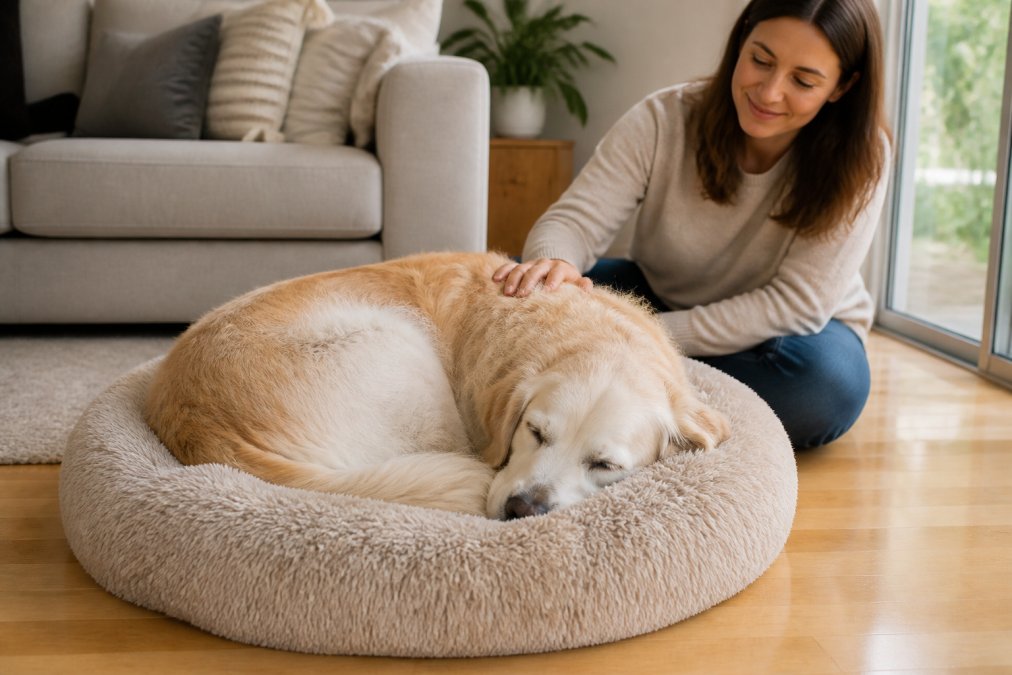
- Curlers and nesters want a bed with raised sides to lean against. A donut or octagonal shape gives them a rim to press into.
- Sprawlers need a flat, open surface with no rim in the way.
- Belly-up sleepers usually run warm and do better on a raised cot with airflow underneath.
- Head-resters like a bolster or a raised edge to prop the chin on.
Material matters for a different reason. Breathable mesh panels help in warm rooms. Tear-resistant fabric matters for dogs who dig at their bedding before settling. A non-slip base keeps the whole thing from sliding across tile when the dog jumps in.
PurrClean Washable Waterproof Pet Bed →
Measuring Your Dog While Curled Up
Measure your dog while curled up, from nose to tail base, and add a small margin. That number, not your dog's standing length, is the sleeping area you need.
The distinction matters because bed listings quote the outside dimensions. A bed described as 60 cm across has a smaller usable sleeping area inside the rim.
Washable Dog Bed Covers: Why Machine-Washable Matters
A machine-washable cover is the single feature that decides how long a bed stays in use. Beds without one get spot cleaned, then smell, then get thrown out. That cycle is expensive and entirely avoidable.
Look for these details:
- A waterproof liner under the cover, which stops moisture reaching the foam
- A stain-resistant outer fabric that wipes clean between washes
- A hair-repellent weave, which sheds fur instead of trapping it
- A cover that comes off without removing the whole bed from its shape
Durability Testing: What 12+ Months of Use Reveals
Long-term durability shows up in three places after a year: the foam, the seams, and the cover. Short reviews never reach this point, which is why so many recommendations do not survive contact with month thirteen.
What holds up:
- High-density foam that recovers its shape after the dog gets up
- Reinforced seams at the corners, where stress concentrates
- Covers that survive repeated washing without pilling or thinning
What fails first:
- Low-density filling that packs down into a flat mat
- Zips that break before the cover wears out
- Non-slip bases that lose grip once hair and dust collect on them
Sustainability and Senior Dog Mobility: Two Angles Most Reviews Miss
Two things get left out of most dog bed coverage: what the bed is made of and how easy it is for an older dog to use. Both change the buying decision.
Conclusion
The gap between a bed that lasts and one that ends up in the bin comes down to foam density, a cover you can wash, and a base that stays put. Those three details decide almost everything, and none of them show up in a product photo.
Frequently Asked Questions
What features make a dog bed high quality?
High quality dog beds share several traits: dense orthopedic foam or supportive cushioning that holds shape, a removable machine-washable cover, a waterproof liner to protect the foam, and tear-resistant fabric. Look for non-slip bases, breathable mesh panels for airflow, and hypoallergenic materials. Beds like the PurrClean Washable Waterproof Pet Bed combine washable covers with durable fabrics, while the Universal Pet Dog Bed offers removable covers in sizes S through 2XL. Weight capacity and foam density matter most for larger dogs.
How do I choose the right size dog bed for my pet?
Measure your dog while curled up, not stretched out, then add 15-20 cm of buffer. The usable sleeping area is always smaller than the bed's overall footprint. For example, the Plush Donut Pet Bed measures 50 cm across the outside, but the recessed sleeping area is smaller. The Octagonal Cushion Pet Bed is 60 cm across externally. If your dog sprawls, size up. The Compact Elevated Pet Cot at 55 x 43 cm suits small pets only. Always check the inner dimensions before ordering.
Are orthopedic dog beds worth the investment?
For large breeds, senior dogs, or pets with joint issues, yes. Orthopedic beds use high-density foam or mattress-grade foam to distribute weight and relieve pressure on hips and elbows. The key is foam density: low-density fill flattens within months, while high-density foam maintains support. If your dog shows stiffness after resting or struggles to rise, an orthopedic bed with supportive cushioning can make a noticeable difference. Pair it with a waterproof liner to protect the foam from accidents and extend the bed's life.
How often should you replace your dog's bed?
Most quality dog beds last 12-24 months with regular cleaning and cover washing. Replace when the foam loses loft, develops permanent indentations, or stops springing back. Chew damage, persistent odors despite washing, or a torn waterproof liner are also signs. Beds with removable, machine-washable covers and waterproof liners typically last longer because the foam stays protected. If your dog's sleeping position changes or they seem restless, the bed may no longer provide adequate pressure relief.
How do I clean a high-quality dog bed?
Start by vacuuming loose hair and debris. Remove the cover and machine-wash according to the care label, usually cold water on a gentle cycle, then air dry or tumble low. Spot clean the foam core with a damp cloth and mild soap, never soaking it. Beds with waterproof liners make this easier because the liner blocks moisture from reaching the foam. The PurrClean Washable Waterproof Pet Bed and Universal Pet Dog Bed both feature removable, washable covers. Wash covers every two weeks for heavy shedders.