
Durable Chew Toys for Aggressive Chewers: Top Picks
Table of Contents
- Why Aggressive Chewers Need Tougher Toys
- Quick Comparison: Best Long-Lasting Chews for Heavy Chewers
- Top Picks: Durable Chew Toys for Aggressive Chewers
- How to Choose the Most Durable Dog Chew Toy
- Safe Chew Toy Size and Material: What to Look For
- When to Replace a Damaged Dog Chew Toy
- Frequently Asked Questions
Last Updated: October 16, 2026
Why Aggressive Chewers Need Tougher Toys
Durable chew toys for aggressive chewers solve a problem that ordinary toys cannot: the gap between a dog's bite strength and a toy's breaking point. A dog that chews intensely can destroy a soft plush toy in minutes, then move on to furniture, shoes, or baseboards.
The mistake most owners make is buying the same toy twice. They pick a "tough" toy from a big-box shelf, watch it come apart in an afternoon, and assume their dog is unmanageable. The toy was the problem, not the dog.
Chewing is normal, and for powerful chewers it is a genuine need. American Kennel Club guidance on destructive chewing notes that dogs chew for boredom relief, dental comfort, and stress release. Denying that outlet pushes the behavior somewhere worse.
What matters is matching material and size to your dog's chewing style. That is what the rest of this guide covers, product by product, with real prices and honest limits.
Quick Comparison: Best Long-Lasting Chews for Heavy Chewers
The table below summarizes our picks by material, size, and price so you can scan before reading the detail.
| Toy | Material | Size / Weight | Price | Best For |
|---|---|---|---|---|
| Medium Elk Chew | Elk antler | 20-40 lb dogs | $28.86 | Sustained solo chewing |
| Sunshine Red Jumbo Hemp Rope Ball | Hemp and cotton rope | 7.09 in, 2.08 lb | $38.81 | Dogs 50+ lb |
| Monli Large Orange Carrot | Durable rubber | Medium to large breeds | $17.25 | Aggressive rubber chewers |
| Coral Pop Lobster | Recycled cotton rope | 7 in or 10 in | $16.17 | Tug and carry |
| Natural Hemp Rope Ball | Hemp, recycled cotton | 2 in or 5 in | $8.62 | Budget entry point |
One note before you read further: every rope toy in this list is built for mild to moderate chewers. The rubber and antler options are the ones to reach for if your dog destroys rope.

Top Picks: Durable Chew Toys for Aggressive Chewers
Each pick below is a real product from our own shelves, with the price and specs listed exactly as they are. We have flagged honestly where a toy suits a gentler chewer.
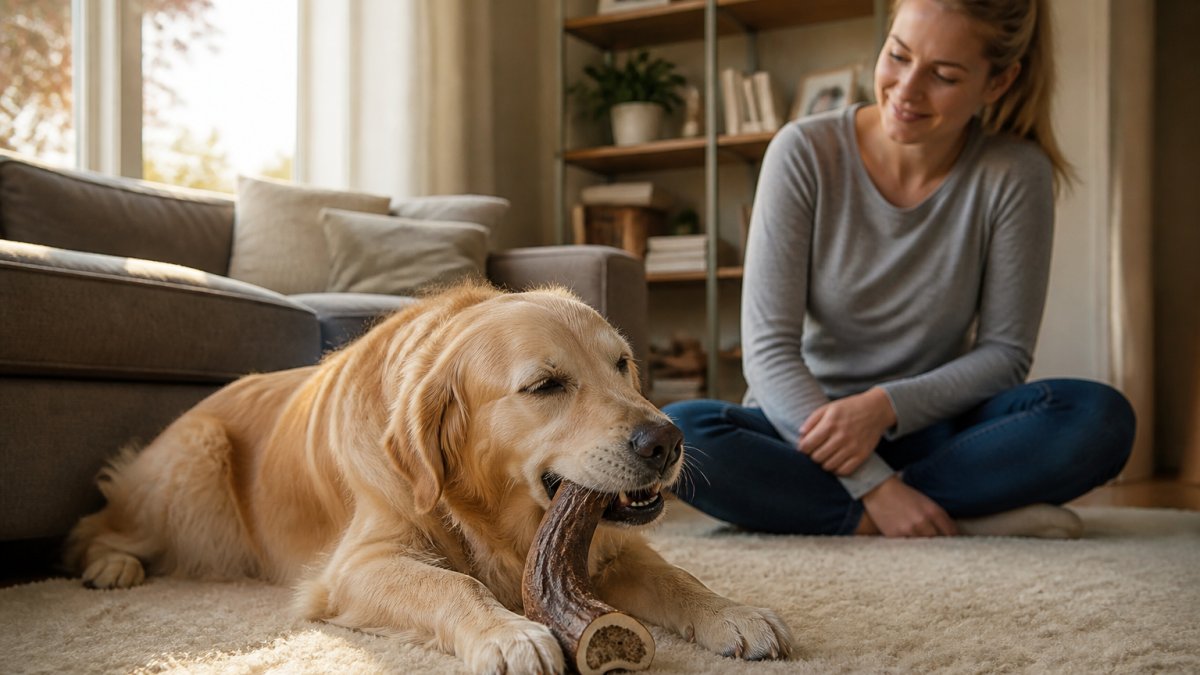
Medium Elk Chew
The hardest-wearing option in this list is a single USA-sourced elk antler for dogs weighing roughly 20 to 40 lb, priced at $28.86. You choose the cut: whole, split, or a watermelon slice quarter cut.
Split antlers expose the softer inner marrow, which is the right call for a dog new to antlers or one with sensitive teeth. Whole antlers last longest for a dog that already chews hard. Because antler is dense and slow to wear, one chew can last weeks rather than hours. Supervise the first few sessions and take it away once it wears down to a nub small enough to swallow.
Sunshine Red Jumbo Hemp Rope Ball Dog Toy
At 7.09 inches wide and just over 2 lb, this jumbo rope ball is made for dogs 50 lb and up, priced at $38.81. The tightly knotted hemp and cotton construction gives a big dog something to grip, carry, and shake.
It is a tug and fetch toy first. The listing recommends it for mild to moderate chewers, so if your dog's idea of fun is shredding rope into fibers, pair it with the antler instead. For a large dog that mostly wants to carry and chase, this is the sturdiest rope option we stock.
Monli Large Orange Carrot Dog Chew Toy
The carrot is the one to buy if your dog chews rubber rather than rope. Its durable rubber body is built to handle enthusiastic chewing, and the listing states it withstands aggressive chewing in a large size suited to medium and large breeds. It costs $17.25.
Two practical bonuses: the carrot shape keeps a dog curious and engaged, and the rubber texture helps clean teeth and reduce plaque as the dog works. Materials are non-toxic and pet-safe.
Coral Pop Lobster Dog Toy - Thick and Durable Rope
Hand-woven from recycled cotton rope with a two-tone red and coral twist, the lobster comes in a 7-inch small for dogs up to 25 lb and a 10-inch large for dogs over 25 lb. It costs $16.17.
The thicker braided core and knotted claws make easy grab points for tug and carry, and the plastic-free build appeals to owners avoiding synthetic materials. Like the other ropes here, it is listed for mild to moderate chewers. A dog that only mouths and tugs will get a long life out of it.
Natural Hemp Rope Ball Dog Toy - Recycled Cotton
Our cheapest entry is the Natural Hemp Rope Ball at $8.62, in a 2-inch small for dogs under 20 lb and a 5-inch large for dogs over 25 lb. It is handcrafted from a hemp and recycled cotton blend, free from harsh chemicals and additives.
The firm woven texture supports teeth and gums during light chewing, and the round shape is ideal for fetch and independent play.
How to Choose the Most Durable Dog Chew Toy
Most buyers start with the label. The better approach is to start with the dog. A toy marketed as "indestructible" can still be the wrong pick for your specific chewer, and a toy rated "tough" can be perfect for one dog and dangerous for another.
Step 1: Identify the chewing style. Watch your dog for a full session and sort the behavior into one of three patterns.
- The gnawer settles in one spot and works steadily with the back teeth. This dog needs density and slow wear, antler, hard rubber, or a thick nylon-style chew. Soft rope will be gone in an afternoon.
- The shredder grabs, shakes, and pulls fibers apart. Rope is the wrong category entirely for this dog, no matter how thick the braid. Reach for solid rubber or antler, and treat rope as a tug-only toy under supervision.
- The tugger and carrier mostly wants to grip, shake, and parade the toy around. Rope and rubber both work here, provided the knots are tight and the size is right.
Step 2: Match size to the dog, not to the label. A toy must be large enough that your dog cannot fit the whole thing behind its front teeth.
Step 3: Factor in age and dental health. This is where most buying guides stop short.
Step 4: Check the material against the job. Antler is the hardest and longest-wearing but offers no flex. Durable rubber flexes slightly, which spreads bite force and cleans teeth as the dog works.
A quick decision path: gnawer with healthy teeth → antler or hard rubber. Shredder → solid rubber only. Tugger → rope or rubber at the correct size. Puppy, senior, or dental history → soft rubber, vet check first.
ASPCA pet toy safety guidance recommends supervising new toys and removing anything with loose parts, which applies doubly to powerful chewers.
Safe Chew Toy Size and Material: What to Look For
Safe chew toy size and material come down to one rule: the toy must be too large to swallow and free of anything that can break off.

Rubber. Durable rubber flexes slightly under bite force, which spreads the load and reduces the chance of a tooth fracture compared with a rigid chew. It also cleans teeth and massages gums as the dog works.
Nylon and hard composite chews. These are dense and slow-wearing, which makes them popular for heavy chewers.
Antler. The hardest option in this guide and the longest-lasting, but also the least forgiving. Antler suits dogs with healthy, intact teeth.
Rope. The softest category and the best for tugging and gentle mouthing, but also the shortest-lived under a determined chewer. Rope frays into strands, and a strand that separates is a choking and ingestion risk.
The inspection habit. Whatever the material, run a ten-second check before every session. Look for cracks, loose knots, separated strands, softened ends, or pieces that twist off in your hand.
Rotation as a safety tool. Rotating between an antler, a rubber chew, and a rope toy spreads the wear across materials and gives you a clear signal when one is due for retirement.
When to Replace a Damaged Dog Chew Toy
Replace a damaged dog chew toy as soon as it shows structural failure, not when it finally falls apart. Cracks in rubber, exposed or fraying rope strands, and antler worn down to a swallowable nub are all replacement triggers.
The common mistake is waiting for the toy to break completely. By then the dog has already been chewing on a weakened object, and small pieces may already have come loose. Set a habit of a ten-second inspection each time you hand the toy over.
Rotating between an antler, a rubber chew, and a rope toy spreads the wear and gives you a clear signal when one is due for retirement. It also stretches how long each toy lasts, which matters when you are paying $28.86 for a single antler.
Frequently Asked Questions
What are the best long-lasting chews for heavy chewers?
For heavy chewers, choose toys made from dense natural rubber, nylon, or tough hemp rope. The Medium Elk Chew (USA-sourced antler) suits dogs 20-40 lb and comes in whole, split, or quarter cut. Rope toys like the Sunshine Red Jumbo Hemp Rope Ball (7.09 inches, for pups 50+ lb) and the Monli Large Orange Carrot (durable rubber) also hold up well. Always match the toy to your dog's chewing style and size, and inspect regularly for wear.
What is the most durable dog chew toy?
Durability depends on material and construction. Natural rubber toys, like the Monli Large Orange Carrot, resist aggressive chewing and help clean teeth. For power chewers, dense nylon or antler chews such as the Medium Elk Chew last longer. Rope toys are durable but better for mild to moderate chewers. No toy is indestructible, so supervise and replace when damaged. The most durable dog chew toy for your dog will match their bite strength and size.
How do I choose a safe chew toy size and material for my aggressive chewer?
Match the toy size to your dog's weight and breed. For dogs 20-40 lb, the Medium Elk Chew is appropriate. Larger dogs (50+ lb) need bigger toys like the Sunshine Red Jumbo Hemp Rope Ball (7.09 inches). Material matters: natural rubber and nylon are best for power chewers, while hemp rope suits mild to moderate chewers. Avoid toys small enough to swallow. Always supervise and check for wear.
When should I replace a damaged dog chew toy?
Replace a chew toy as soon as you notice cracks, tears, missing pieces, or exposed inner material. For rope toys, discard if strands break or knots loosen. For rubber or nylon toys, replace if chunks are missing or the shape is compromised. Even durable toys like the Medium Elk Chew wear down over time. Regular inspection (weekly) helps prevent choking hazards. When in doubt, replace it.
What is the best toy for a dog that destroys everything?
For dogs that destroy toys quickly, try tough natural rubber or antler chews. The Monli Large Orange Carrot is made from durable rubber and withstands aggressive chewing. The Medium Elk Chew is a long-lasting antler option. For interactive play, the Coral Pop Lobster (thick braided rope) offers durability. Always supervise and rotate toys to keep your dog engaged. No toy is truly indestructible, so monitor for damage.
A dog that chews hard is not a problem to fix. It is a dog that needs the right outlet, and the wrong toy will keep failing you both. Wooflies stocks a focused range of durable chew toys, from elk antlers and tough rubber to tightly knotted hemp rope, so you can match material and size to your dog in one place instead of guessing across a dozen aisles. Browse our dog toys, pick a chew built for your dog's strength, and give it something worth chewing.