
Durable Cat Scratching Post Reviews 2026
Table of Contents
- What Makes a Durable Cat Scratching Post
- Sisal Cat Scratching Post vs Other Surfaces
- Durable Cat Scratcher for Large Cats
- How Often to Replace a Cat Scratching Post
- Common Mistakes That Shorten Post Life
- Matching Post Design to Your Cat's Scratching Behavior
- Frequently Asked Questions
Last Updated: October 11, 2026
What Makes a Durable Cat Scratching Post
A durable cat scratching post is built to withstand repeated claw strikes, weight shifts, and years of daily use without deteriorating or becoming unsafe. At Wooflies, we understand that a scratching post isn't just furniture, it's an essential outlet for your cat's natural behavior and a way to protect your home. The difference between a post that lasts months and one that lasts years comes down to material quality, construction methods, and how well the base resists tipping.
The best durable cat scratching posts combine solid construction with materials cats actually want to scratch. Sisal rope, wrapped tightly around wooden posts, remains the gold standard because it's rough enough to satisfy cats' scratching instincts while lasting through hundreds of claw sessions. Cheaper posts often use thin carpet or loosely wrapped materials that unravel after a few weeks of use.
Material quality and construction
Material quality determines whether your post survives six months or six years. Posts wrapped with high-grade sisal rope hold up far better than those using low-quality jute or thin carpet. The wood core matters too, solid wood resists splitting and warping better than particle board or hollow tubes that collapse under pressure.
When evaluating construction, look for posts where the sisal is wound tightly and secured at the base, not glued loosely to the surface. Posts with multiple layers of wrapping (rather than a single thin layer) last significantly longer. The joints where different materials meet should be reinforced, not just glued together. A durable cat scratching post that's built to last will have no gaps between the wrapping and the post itself.
Stability and base design
A scratching post that wobbles is a scratching post your cat will avoid, or worse, one that tips over and scares them. Stability depends entirely on base size and weight. Posts with narrow bases tip easily, especially when large cats lean into their scratches at an angle. A solid, wide base (ideally 12 inches or larger) distributes weight evenly and prevents the entire structure from shifting.
The base material also matters. Weighted bases filled with sand or concrete stay put better than hollow bases. Some posts use non-slip feet to grip carpet or hardwood floors, which adds stability without increasing base size. If a post wobbles when you push it with moderate force, it will wobble when your cat scratches, and they'll lose interest quickly.
Sisal Cat Scratching Post vs Other Surfaces
Cats have distinct scratching preferences, and the surface material determines whether they'll use a post consistently or ignore it entirely. Understanding these differences helps you choose a post your cat will actually embrace.
Why cats prefer sisal
Sisal rope mimics the texture of tree bark and outdoor scratching surfaces, which is why cats naturally gravitate toward it. The rough, fibrous texture provides satisfying resistance as claws dig in, allowing cats to shed their outer nail sheaths effectively. Sisal also makes an audible scratching sound that cats find rewarding, the acoustic feedback reinforces the behavior.
Posts wrapped in high-quality sisal tend to see higher adoption rates than alternatives. Cats will scratch sisal repeatedly, which means the material gets tested constantly. This repeated use is precisely why material quality matters, cheap sisal unravels quickly, becomes less satisfying to scratch, and cats move on to your furniture instead.
Cardboard and carpet alternatives
Cardboard scratchers appeal to some cats and offer affordability, but they deteriorate rapidly. A cardboard post typically lasts 2-3 months before becoming too shredded to use. They're best viewed as supplementary scratchers, not primary posts. Carpet-covered posts are durable but often fail to satisfy cats' scratching drive the way sisal does. Cats may scratch carpet posts occasionally, but they rarely prefer them over sisal or natural materials.
Horizontal scratchers made from corrugated cardboard work well for cats that prefer scratching at ground level. Angled scratchers offer a middle ground, letting cats scratch at various angles. The key is offering multiple surfaces, some cats will use cardboard while others demand sisal, so a multi-surface approach covers more preferences.
Durable Cat Scratcher for Large Cats
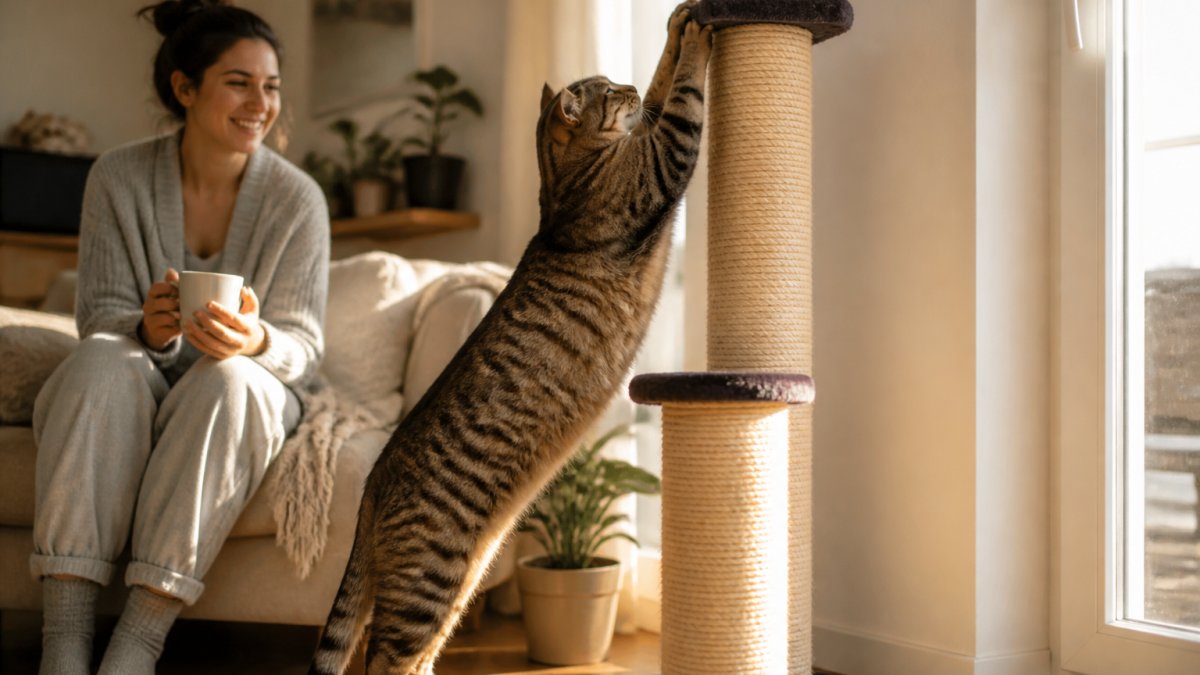
Large cats need taller posts and sturdier construction than average felines. A standard 24-inch post leaves a large cat unable to fully stretch their spine during scratching, which defeats the purpose of the post entirely. They'll either ignore it or move to your furniture where they can get a full-body stretch.
Height and full-body stretch requirements
A durable cat scratcher for large cats should be at least 30-36 inches tall, ideally taller. This height allows large cats to rear up on their hind legs and stretch their entire body while scratching. When cats can't achieve a full-body stretch at a post, they don't use it, they scratch your walls, sofas, or door frames instead.
Beyond height, the post needs to be sturdy enough to support a large cat's weight without flexing or bending. A post that sways under pressure won't feel stable to your cat, and they'll avoid it. Large cats (15+ pounds) need posts with reinforced construction, thicker sisal wrapping, and weighted bases that don't shift when they lean into scratches.
Base size and weight capacity
A large cat's scratching generates significant force, especially when they're leaning sideways into a scratch. Posts with narrow bases (under 12 inches) will tip or shift under this pressure. The base should be at least 14-16 inches in diameter for large cats, with a weight capacity clearly rated for 20+ pounds.
The base material should be solid, not hollow. Sand-filled or concrete-weighted bases provide stability that hollow bases can't match. Some posts use rubberized feet or non-slip pads, which help prevent sliding across hardwood floors. A wide, weighted base is non-negotiable for large cats, it's the difference between a post they'll use daily and one they'll ignore.
How Often to Replace a Cat Scratching Post
Most durable cat scratching posts last 2-5 years with proper maintenance, depending on usage intensity and material quality. A post in a multi-cat household will wear faster than one used by a single cat. High-quality sisal posts last longer than budget alternatives, but even premium posts eventually reach the end of their lifespan.
New pet Cat Corner Scrubber Massager Cat Scratching Scratching Scratcher Cat →
Signs your post needs replacement
A post needs replacement when the sisal becomes so shredded that it no longer provides satisfying scratching resistance. If you see more loose fibers than intact wrapping, or if the post has bald patches where the sisal has worn completely away, it's time to replace it. Cats will stop using a worn-out post, which means they'll start scratching furniture again.
Structural damage, cracks in the wood, wobbling that can't be fixed, or a base that no longer stays in place, signals replacement time. Posts that have become unstable are less appealing to cats and potentially unsafe if they could fall and injure them. If the post smells musty or shows signs of mold, replace it immediately.
Extending post lifespan through maintenance
Regular maintenance extends the life of a durable cat scratching post significantly. Vacuuming loose fibers weekly prevents buildup and keeps the post looking better longer. Rotating the post occasionally distributes wear more evenly, if cats favor one side, rotating it exposes fresh sisal to scratching.
Inspect the base regularly to ensure it remains stable and hasn't shifted on the floor. Tighten any loose bolts or connections. If the post is in a humid environment, use a dehumidifier to prevent moisture damage. Some owners periodically wrap worn sections with additional sisal tape to extend the post's life, though this is a temporary fix. A post that's becoming unsafe should be replaced rather than patched.
Common Mistakes That Shorten Post Life
Placing a post in the wrong location is one of the biggest mistakes. Posts hidden in corners or bedrooms get less use, which means they deteriorate more slowly, but they also don't serve their purpose of protecting your furniture.
Choosing the wrong material for your cat's preferences wastes money. If your cat prefers horizontal scratching but you buy a tall vertical post, they won't use it. Observing where your cat scratches around your home (walls, furniture, floor) tells you whether they prefer vertical, horizontal, or angled surfaces.
Underestimating size is another frequent error. A post that's too short or too narrow won't satisfy your cat's scratching needs, especially for large cats. They'll either ignore it or use it minimally, which means the post lasts longer but serves no purpose.
Neglecting maintenance accelerates wear. Posts in humid environments or near windows develop moisture issues faster. Loose fibers that aren't vacuumed up attract dust and can create odor problems.
Matching Post Design to Your Cat's Scratching Behavior
Different cats have different scratching preferences, and understanding your cat's natural behavior helps you choose a post they'll actually use. Some cats prefer scratching high on vertical surfaces. Others prefer scratching at ground level or at angles.
Watch where your cat scratches around your home. If they scratch the sides of your sofa or door frames, they prefer vertical scratching. If they scratch rugs or the underside of furniture, they prefer horizontal or angled surfaces.
The height preference also varies. Some cats prefer scratching at chest height, others reach up high. Large cats almost always prefer tall posts for full-body stretches.
Wooflies carries specialized scratching accessories designed for different preferences. The New Pet Cat Corner Scrubber Massager offers a unique corner-mount design that lets cats scratch at angles while providing massage functionality, a versatile option for cats that like variety in their scratching surfaces.

Choosing the right durable cat scratching post requires balancing material quality, structural stability, and your cat's specific preferences. A post that wobbles, wears out quickly, or doesn't match your cat's scratching style won't protect your furniture or satisfy your cat's needs.
| Feature | Impact on Durability | Best Practice |
|---|---|---|
| Sisal rope quality | High | Choose tightly wrapped, high-grade sisal |
| Base size | High | Minimum 12 inches for standard cats, 14-16 for large cats |
| Wood construction | High | Solid wood resists splitting better than particle board |
| Post height | Medium | 24-30 inches for standard cats, 30-36+ for large cats |
| Maintenance | Medium | Weekly vacuuming and regular inspection extend lifespan |
| Material variety | Low-Medium | Matching post type to cat preference increases use and longevity |
Frequently Asked Questions
What makes a durable cat scratching post last longer?
A durable cat scratching post combines quality materials, solid construction, and a wide, weighted base that resists tipping. Posts made with natural sisal rope or woven sisal withstand repeated scratching better than cheaper alternatives. The frame should be sturdy wood, not thin particleboard, and the base should be wide enough to prevent wobbling even when your cat scratches aggressively.
How often should you replace a cat scratching post?
Replace your post when the scratching surface is significantly worn, frayed, or no longer attracts your cat, typically every 1-3 years depending on use and material quality. Heavy use by multiple cats or large cats may require replacement sooner. Regular maintenance, such as trimming loose sisal fibers and rotating the post's position, can extend its lifespan.
What height should a scratching post be for a large cat?
A large cat needs a post at least 90-100 cm (36-40 inches) tall to stretch fully and engage their entire spine. Many large cats benefit from posts 120 cm (48 inches) or taller. The post should allow your cat to stand on hind legs with their front paws extended upward without their head reaching the top, providing the full-body stretch that maintains healthy muscles and claws.
Is sisal rope or sisal fabric better for a cat scratching post?
Both work well, but they serve different preferences. Woven sisal fabric is denser and typically lasts longer under heavy scratching. Sisal rope provides a textured surface that many cats find satisfying but may fray more quickly. The best choice depends on your cat's scratching style and how aggressively they use the post. Quality matters more than the specific type, cheap sisal of either kind wears out fast.