
Best Slow Feeder Bowls for Dogs: Top Picks and Tips
Table of Contents
- Why Your Dog Needs a Slow Feeder Bowl
- How to Stop a Dog from Eating Too Fast
- Benefits of Slow Feeder Bowls for Dogs
- Best Slow Feeder Bowls for Dogs: Top Picks
- How to Clean Slow Feeder Bowls
- Choosing the Right Slow Feeder Bowl for Your Dog
- Conclusion
- Frequently Asked Questions
Last Updated: September 30, 2026
Why Your Dog Needs a Slow Feeder Bowl
A slow feeder bowl uses raised ridges, mazes, or textured surfaces that force a dog to work around obstacles to reach food, extending mealtime from seconds to minutes and supporting safer digestion.

How to Stop a Dog from Eating Too Fast
The most effective fix for fast eating is a slow feeder bowl combined with smaller, more frequent meals.
Start with these steps:
- Split the daily portion into two or three smaller meals instead of one large one
- Switch from a standard bowl to a ridged or maze-style slow feeder
- Scatter a handful of kibble on a snuffle mat for variety
- Avoid raised bowls for fast eaters, since they can increase air intake
- Feed in a quiet spot so your dog isn't competing for food
Benefits of Slow Feeder Bowls for Dogs
The benefits of slow feeder bowls for dogs go beyond a longer mealtime: slower eating supports digestion, reduces air swallowing, and adds mental stimulation.

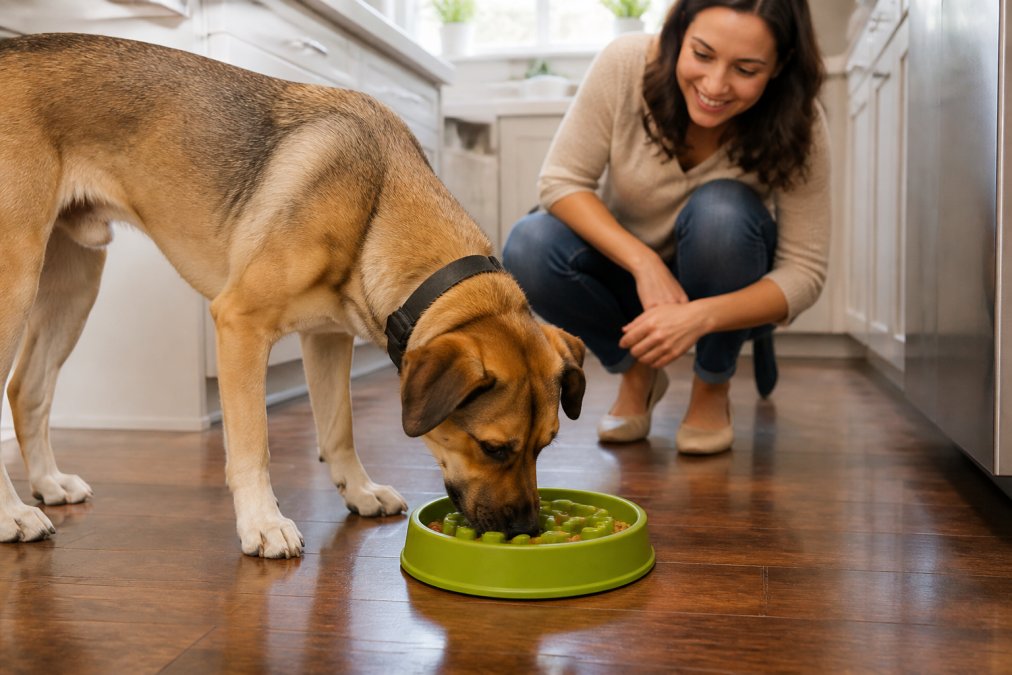
Key advantages include:
- Less gulped air, which lowers the risk of bloating and regurgitation
- Better digestion, because food is chewed and swallowed in smaller amounts
- Portion control, since the bowl makes a normal serving feel like more work
- Mental stimulation, turning a routine meal into a problem-solving task
- Reduced boredom, which can cut down on destructive chewing after meals
Best Slow Feeder Bowls for Dogs: Top Picks
Every pick below comes from the Wooflies range and solves a different feeding problem. Prices are current as listed.
| Product | Price | Best For | Key Feature |
|---|---|---|---|
| Slow Feeder Pet Bowl | $23.80 | Everyday meals | Raised ridges divide food into sections |
| Drawstring Snuffle Mat | $24.99 | Enrichment | Felt strips hide kibble for sniffing |
| Pet Slow Feeding Set | $18.48 | Travel and small breeds | Collapsible bowl, licking plate, mat |
| Two-Layer Dog Treat Puzzle | $27.99 | Mental stimulation | Six compartments across two layers |
Slow Feeder Pet Bowl: Best for Everyday Meals
For most dogs, the simplest upgrade is the Slow Feeder Pet Bowl at $23.80. Raised ridges divide a normal portion into smaller sections, so your dog works around each ridge instead of swallowing mouthfuls.

Drawstring Snuffle Mat for Dogs: Best for Enrichment
The Drawstring Snuffle Mat for Dogs at $24.99 turns a few pieces of dry kibble into a supervised sniffing activity: tuck food between the grass-green felt strips and let your dog explore at their own pace.
Pet Slow Feeding Set: Best for Travel and Small Breeds
Small breeds and puppies need a gentler slow feeder, and the Pet Slow Feeding Set at $18.48 fits that gap with a collapsible drinking bowl, a textured licking plate with a suction base, and an anti-slip feeding mat.
Two-Layer Dog Treat Puzzle: Best for Mental Stimulation
The Two-Layer Dog Treat Puzzle at $27.99 makes mealtime a brain workout. It has two layers with six food compartments, and your dog moves the covers to reach dry kibble.
How to Clean Slow Feeder Bowls
Cleaning a slow feeder takes more effort than rinsing a plain bowl, because food packs into the ridges and channels and leftover kibble and moisture encourage bacterial growth. The difficulty depends on what you're feeding and what the bowl is made of.
The basic routine (works for kibble)
- Scrape out leftover food right after the meal
- Wash with hot water and dish soap, working a brush into every ridge and corner
- Rinse thoroughly and dry completely before the next use
- Deep-clean weekly with a soak in hot soapy water
- Check the material before dishwashing
A soft bottle brush or silicone-ribbed brush reaches into maze channels far better than a sponge, which smears residue into corners rather than lifting it out.
Raw food residue: the problem nobody talks about
Raw diets are the hardest case for a slow feeder. Raw meat, organ, and bone residue is fattier and stickier than kibble dust and lodges in narrow channels where a normal wash won't reach; left at room temperature, it's a genuine bacterial risk.
- Rinse the bowl immediately after the meal, before residue dries and bonds to the surface
- Wash with hot water and dish soap, then follow with a food-safe sanitizing step (a diluted white-vinegar rinse or a pet-safe kitchen sanitizer)
- Use a separate brush for raw-fed bowls and don't cross-contaminate it with other dishes
- Dry fully, moisture in a deep channel is where biofilm starts
- Deep-clean more often than a kibble-fed bowl, since fat residue builds a film that soap alone won't strip
Material decides the method
- Silicone (like the Pet Slow Feeding Set) is dishwasher-safe on the top rack and tolerates hot water well. Silicone can hold odors over time; a vinegar soak refreshes it.
- Felt snuffle mats need hand washing and full air drying. Trapped moisture is a hygiene risk, and a damp mat will smell and put your dog off their food.
- Rigid plastic tolerates hot water but scratches easily, and scratches hold bacteria. Replace a plastic bowl once the surface is visibly scored.
- Stainless steel is the most hygienic option, non-porous, doesn't scratch easily, and doesn't hold odor, which is why it's easiest to keep clean for raw feeding.
How often to deep-clean
A kibble-fed bowl needs a weekly deep-clean; a raw-fed bowl needs sanitizing after every meal; a felt mat needs washing as often as it's used, with full drying between uses. If your dog has a sensitive stomach or there's been diarrhea in the house, sanitize more aggressively until things settle.
Choosing the Right Slow Feeder Bowl for Your Dog
Matching the bowl to your dog matters more than picking the most expensive option. Four factors decide the right choice: size, chewing style, breed shape, and how your dog eats. Two groups get almost no guidance anywhere, raw-fed dogs and senior dogs, and they're the ones where the wrong bowl causes the most problems.
The four core factors
- How big is your dog? Large breeds need a wider, deeper bowl with a full-size capacity. Small breeds and puppies do better with shallow ridges and a smaller plate.
- How hard does your dog chew? Heavy chewers need a durable material and close supervision. A felt mat or a bowl with loose covers won't survive a determined chewer.
- Is your dog flat-faced? Brachycephalic breeds need shallow, gentle ridges rather than deep mazes, since they can't reach deep channels without straining to breathe.
- What's the goal? For everyday meals, a ridged bowl works. For enrichment, a snuffle mat or puzzle adds variety. For travel, a collapsible set wins.
If your dog is raw-fed
Raw portions behave differently from kibble in a slow feeder: raw meat is heavier, wetter, and clumps and sticks instead of sliding into narrow channels. A deep maze designed for kibble can leave raw food jammed in corners your dog can't reach, frustrating and a hygiene problem.
For raw feeding, look for:
- A wide, shallow bowl with low ridges rather than a tall maze, the food stays reachable and the bowl is far easier to sanitize
- Stainless steel or food-grade silicone over scratched plastic, since raw residue is a bacterial concern and non-porous surfaces clean more reliably
- Fewer, wider channels, complex patterns trap raw residue and are hard to brush out
If your dog is a senior
Accessibility is the factor most guides ignore. A dog with arthritis, a stiff neck, or reduced mobility struggles to reach into deep ridges, so eating becomes a source of pain rather than enrichment. A senior who leaves food in the bottom of a maze bowl or gives up partway through a meal often has a reach problem, not a pickiness problem.
For senior dogs:
- Choose a shallow bowl or a flat licking mat over a deep maze, the head doesn't have to drop as far and the neck stays in a more natural position
- Raise the bowl slightly if your dog has neck or shoulder issues, but avoid steep raised feeders for fast eaters, since those can increase air intake
- Non-slip base matters more for older dogs, who can lose footing on a sliding bowl and become anxious about eating
- Softer food placement, don't pack kibble deep into channels; keep it near the surface so a slower eater doesn't tire out before finishing
Durability: the heavy-chewer test
Slow feeders take more wear than a plain bowl because dogs work at them with teeth and paws. If your dog is a destructive chewer, rigid plastic ridges are the first to go, they crack, lift, and become a choking hazard. Stainless steel and thick food-grade silicone survive far better. Inspect any bowl weekly for cracks, lifted ridges, or loose pieces, and replace it at the first sign of damage.
Conclusion
Picking the right feeder comes down to your dog's size, breed shape, and how hard they chew, not the fanciest design on the shelf. Get those three right and mealtime becomes calmer, safer, and more interesting.
Frequently Asked Questions
What material is best for a slow feeder dog bowl?
Food-grade silicone and stainless steel are the top choices. Silicone is soft, non-toxic, and dishwasher safe, which makes it easy to clean and gentle on your dog's nose. Stainless steel is durable and resistant to chewing, but it can be noisy. Plastic bowls are lightweight but may scratch over time and harbor bacteria if not cleaned thoroughly. Look for BPA-free and phthalate-free materials to keep mealtime safe. The Pet Slow Feeding Set from Wooflies uses food-grade silicone that is PVC and BPA-free.
Do vets recommend slow feeder bowls?
Many veterinarians suggest slow feeder bowls for dogs that eat too fast, gulp air, or have a history of regurgitation. Slowing down eating can reduce the risk of bloat, a life-threatening condition in deep-chested breeds. Vets also recommend them for dogs that need mental stimulation during meals. However, every dog is different, so consult your vet if your dog has a medical condition. Slow feeder bowls are a practical tool, not a cure for underlying health issues.
Can slow feeder bowls help prevent bloat in dogs?
Slow feeder bowls can help reduce the amount of air a dog swallows during meals, which is one factor linked to bloat (gastric dilatation-volvulus). By forcing your dog to work around ridges or maze patterns, they eat more slowly and gulp less. That said, bloat has multiple causes, including genetics, exercise timing, and meal size. Using a slow feeder is a sensible preventive step, especially for high-risk breeds, but it should be part of a broader feeding routine discussed with your vet.
How do I clean a slow feeder bowl properly?
Rinse the bowl immediately after each meal to remove food residue. Most silicone and stainless steel slow feeders are dishwasher safe on the top rack, but check the manufacturer's instructions. For hand washing, use hot water and pet-safe soap, then scrub the ridges with a bottle brush to reach tight corners. Dry completely before refilling to prevent bacterial growth. Inspect regularly for cracks or wear, and replace the bowl if you notice damage. The Pet Slow Feeding Set is dishwasher safe and freezer safe.
Are slow feeder bowls suitable for flat-faced dogs?
Flat-faced (brachycephalic) breeds like pugs and bulldogs may struggle with deep or narrow slow feeder bowls because their short snouts make it hard to reach food. Look for shallow, wide bowls with gentle ridges instead of deep maze patterns. Silicone bowls with flexible ridges often work better for these breeds. Always supervise the first few meals to ensure your dog can eat comfortably without frustration. If your dog seems stressed, try a licking mat or snuffle mat as an alternative.